Decentralization & distributed ledgers
“Decentralisation refers to tire systematic effort to delegate to the lowest levels all authority except that which can only be exercised at central points.” —Louis A. Allen
Decentralization Defined
Decentralization is a type of organizational structure in which top management delegate responsibility to the middle and lower levels of management. Daily operations and small decision-making capacities are delegated to the middle and lower levels of the organization under this structure, allowing top-level management to concentrate on big issues such as corporate development and diversification.
Example of Decentralization
Hotels, supermarkets, and real estate are good examples of decentralized businesses. Take, for example, a hotel. It is impossible for one individual to focus on more than 100 branches with branches all over the world. When a person owns a hotel chain, he concentrates on decentralized structures that enable local hotel managers and assistants to make on-the-spot decisions to handle client problems, complaints, and requirements.
Why Is Decentralization Important?
- The majority of decisions are made at the moment, with no need for permission from higher authorities. An organization's capacity to make timely decisions helps it to operate efficiently and successfully.
- When managers are given responsibilities and tasks to find solutions, the decentralization process calls into question their judgment and approaches. This type of questioning builds confidence, develops self-reliance, and makes them competent decision-makers, all of which contribute to the organization's growth.
- Better control and supervision: Decentralization helps in better growth as well as control and supervision
Disadvantages of Decentralization
- The problem of Co-Ordination: Because power is scattered throughout the organization, decentralization of authority may cause coordination issues.
- Expensive: As a result of decentralization, every employee has responsibility for the organization's success, and they work harder to meet all of the organization's goals. In exchange, they must be compensated more, which can be quite costly to the firm.
Distributed Ledgers
What Are Distributed Ledgers?
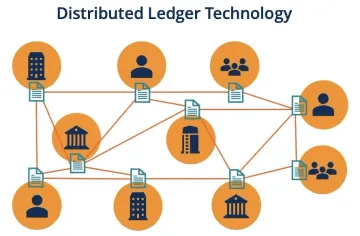
A distributed ledger is a database that is shared and synced by a group of individuals across many sites, institutions, or countries. It enables for public "witnesses" to be present during transactions. Each network node's member has access to the recordings shared throughout the network and can possess an identical copy of them. In a couple of seconds or minutes, any modifications or additions to the ledger are reflected and replicated to all participants.
Understanding Distributed Ledgers
A distributed ledger is a decentralized ledger of any transactions or contracts that is maintained across several places and persons, obviating the need for a central authority to keep an eye on things. A central authority is not required to authorise or authenticate any transactions in this manner. Cryptography is used to safeguard and precisely store all of the information on the ledger, which can be accessed via keys and cryptographic signatures. Once the data is saved, it becomes an immutable database governed by the network's rules.
Use of Distributed Ledgers
The use of distributed ledger technology has the potential to transform the way governments, organizations, and businesses operate. It may assist governments with tax collection, passport issuance, property registries, licensing, and the distribution of Social Security benefits, as well as voting processes. In various industries, the technology is causing a stir like music, finance, artwork, etc.
Advantages of Distributed Ledgers
While centralized ledgers are vulnerable to cyber assaults, distributed ledgers are intrinsically more difficult to penetrate since an attack must target all of the distributed versions at the same time to be effective. Furthermore, these data are immune to single-party harmful alterations. Distributed ledgers provide for a great deal of transparency since they are difficult to manipulate and attack. Distributed ledgers also eliminate operational inefficiencies, reduce the time it takes to execute a transaction, and are automated, allowing them to operate 24 hours a day, seven days a week, all of which lower total costs for the businesses that utilize them.