Hard fork vs. Soft fork - Definition & tax implications
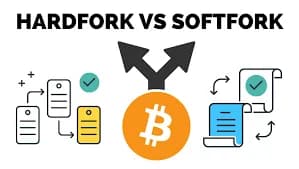
Hard fork refers to a radical change to the protocol of a blockchain network that effectively results in two branches, one that follows the previous protocol and one that follows the new version.In a hard fork, holders of tokens in the original blockchain will be granted tokens in the new fork as well, but miners must choose which blockchain to continue verifying.
A hard fork can occur in any blockchain, and not only Bitcoin (where hard forks have created Bitcoin Cash and Bitcoin SV, among several others, for example).
Tax treatment indicates that the tax agency will treat the forked and airdropped cryptocurrency as new wealth to the taxpayer, resulting in additional income taxes, taxed as ordinary income rates. The timing of these factors is based on the concept of “constructive receipt.” Income is constructively received when an amount is credited to a taxpayer’s account or made available to the taxpayer without restriction. Possession is not required. Income is not constructively received if the taxpayer’s control of its receipt is subject to substantial restrictions or limitations. This is relevant in certain cases where an individual maintains an account at an exchange, but the exchange does not support the new forked/airdropped cryptocurrency at the time of the fork/airdrop.
For example: 10 BCH coins received @ $400/e.a. as hard fork will result in ordinary income of 10 x $400 = $4,000. If these coins are sold when the market price of BCH was $850, capital gains will be reported of (10 x $850) - (10 x $400) = $4,500.
Soft fork is a backward-compatible upgrade, meaning that the upgraded nodes can still communicate with the non-upgraded ones. What you typically see in a soft fork is the addition of a new rule that doesn’t clash with the older rules.
For example, a block size decrease can be implemented by soft-forking. Let’s once again draw on Bitcoin to illustrate this point: though there’s a limit on how big a block can be, there isn’t a limit on how small it can be. If you want to only accept blocks below a certain size, you just need to reject bigger ones.
Tax treatment:
Soft forks don’t result in any taxes because there is no new coin being added to your wallet.