How does a Bitcoin ATM work
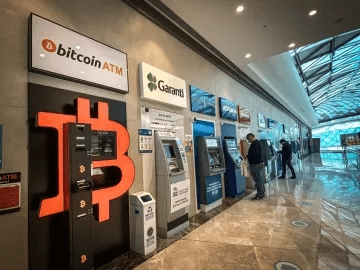
A bitcoin ATM is an Internet-connected kiosk that allows customers to purchase bitcoins and/or other cryptocurrencies with deposited cash.
A bitcoin ATM is not the same as an automated teller machine (ATM) that allows bank customers to physically withdraw, deposit, or transfer funds in one's bank account. Rather, bitcoin ATMs produce blockchain-based transactions that send cryptocurrencies to the user's digital wallet, often via the use of a QR code. A bitcoin ATM is an Internet-connected kiosk that allows customers to purchase bitcoins and/or other cryptocurrencies with deposited cash.
While some of the early versions of Bitcoin ATMs (and the majority of those in operation today) did not allow its users to sell Bitcoin as well, Coin Cloud ATMs allow users to both buy Bitcoin using cash and sell Bitcoin for cash, safely and securely.
A monitor, QR scanner, bill acceptor, and dispenser are all part of a Bitcoin ATM. These components are connected via software on the backend to make buying and selling Bitcoin quick, easy, and secure.
Before You Go to the Bitcoin ATM
Get a digital wallet
You'll need a digital wallet to store your digital money, just like we need physical wallets to store our physical money. Your digital money has to "go" somewhere, and your Bitcoin wallet gives you a place to "store" it, figuratively speaking.
In reality, all bitcoins are stored in the blockchain, which is an online ledger. So, while your digital wallet does not contain bitcoins per se, it does store your balance and allows you to keep track of your cryptocurrency in the same way that a physical wallet does.
Digital wallets are available in a variety of formats, including web-based, hardware devices, and desktop software, but if you’re interested in Bitcoin ATMs, a mobile app or web-based digital wallet will likely suit you best. You can determine what digital wallet works for you via Bitcoin.
Set up your digital wallet and have easy access to it
Before going to a Bitcoin ATM, make sure your wallet is ready. If you use a mobile app as a wallet, it's as simple as setting up the app.
Otherwise, depending on the wallet type you have, mobile access varies. To secure your cryptocurrency, all wallets have "keys," which are typically alphanumeric characters. This key may need to be written down or a QR code downloaded. Follow the instructions provided by your wallet.
How to Buy Bitcoin at a Bitcoin ATM
Here’s how a Bitcoin ATM works to purchase Bitcoin. The process is simple, and relatively similar across operators.
1. Open an account with the Bitcoin ATM operator and establish your identity in a secure manner.
2. You'll need a Bitcoin wallet, which can be easily obtained as a downloadable app for your smartphone and will securely store the records of all of your Bitcoin transactions.
3. Put money in the ATM and tell the machine which Bitcoin wallet address you want it sent to. Let's say you put $100 in. After that, the Bitcoin ATM operator sells you $100 worth of Bitcoin at the current market price, less their own operating fee.
4. You'll get confirmation that your Bitcoin wallet now has a secure record of this transaction, proving that you own $100 worth of Bitcoin less fees.
How to Sell Bitcoin at a Bitcoin ATM
Do you want to exchange your Bitcoin for cash? Some Bitcoin ATMs can also be used to sell Bitcoin. Here's how to do it:
1. You must first create an account with a Bitcoin ATM operator if you do not already have one.
2. You then log in to your account using one of their kiosks, specify how much Bitcoin you want to sell, and which wallet address you want to sell from.
3. This transaction must be verified on the Bitcoin network, or blockchain, and you will be notified when it is complete and you can withdraw your funds. This takes longer than purchasing Bitcoin, and some operators take longer than others.
NOTE: Deal with a reputable Bitcoin ATM operator who offers fast, reliable service.
4. As with buying Bitcoin, the ATM operator will charge a fee for the transaction, so the cash you collect will be minus the operator’s fee and possibly also the miner’s fee.
Bitcoin ATM Fees
A service fee is charged to customers who use a bitcoin ATM. Rather than a fixed dollar amount, this fee is usually charged as a percentage of the transaction. The Consumer Financial Protection Bureau (CFPB) has warned that fees for using Bitcoin ATMs can be extremely high, and that the exchange rates offered may not be as good as those available elsewhere.